While researching how civilizations come to exist, I came across a pioneer work on the subject, which still resonates today.
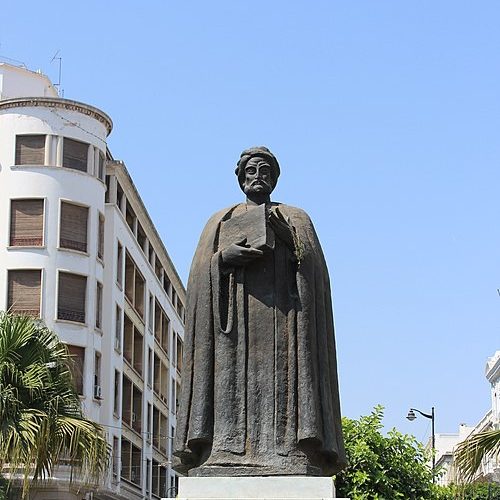
Looking back on how past empires have risen to power, and then eventually fell, we often focus on very narrow factors. These factors, such as military power, physical resources, or strong leadership do allow empires to rise and fall, however, there is more than meets the eye. In the 14th century, Ibn Khaldoun, a North African scholar and philosopher, first dove beneath the surface. Ibn Khaldoun suggested a a theory that combined sociology, politics, economics, and history to create a revolutionizing explanation for the lifecycle of civilizations.
Often labeled as the father of modern sociology, Ibn Khaldoun’s work established the baseline for our modern understanding of human societies and social behaviors. Ibn Khaldoun’s most famous work Al-Muqaddimah was written in 1377. Al-Muqaddimah analyzed how different societies function, what influences their success, and what eventually prompts their decline.
The Core of Civilization. Asabiyyah.
Ibn Khaldoun’s theory is built upon asabiyyah. An Arabic term, asabiyyah translates to social cohesion, or solidarity within different groups.
Ibn Khaldoun starts his theory by explaining that all great empires must start with a group of united people, often nomadic tribes. These groups are brought together through shared identities, loyalties, or leaders. Their unity offers them strength and discipline, allowing them to conquer existing societies and establish their own powerful empire.
Unity within the groups is the greatest within local tribes and rural communities in which the survival of the individual is deponent on group cooperation. Again, their strength originates from group unity, allowing them to take over existing powers.
Dynasties are Cycles
Ibn Khaldoun builds upon his explanation of how civilizations begin, outlining how they rise to power, grow in influence, and then eventually tumble. Ibn Khaldoun places this pattern into a predictable cycle of five stages, often lasting three to four generations (100-150 years).
Stage 1. Conquest and Establishment
A united group with strong asabiyyah establishes control within a region. This is often through military conflict.
Stage 2. Consolidation of Power
The rulers of the newly established empire work to build political institutions to legitimize their power and enforce order within the population.
Stage 3. Economic and Cultural Growth
Wealth within the empire naturally increases as stability is established. The cities grow, the arts thrive, and the dynasty is at its peak power.
Stage 4. Luxury and Complacency
As wealth increases, the rulers become complacent, focusing on comfort and status over the success of the population. Asabiyyah starts to decline.
Stage 5. Decline and Fall
Weaker, corrupt rulers hurt society. The poor leadership becomes ineffective and over time, a more powerful group will take over.
Urban vs. Rural
Ibn Khaldoun also makes a key distinction between nomadic and urban life. Nomads have very strong asabiyyah due to their relatively simple ways of life and their dependence on a strong community. They are able to eventually build empires through a shared struggle and many years of difficult work. Those living in Urban areas, however, are accustomed to simple luxuries and often lose their desire to collaborate with others within the community. Their comfort causes unity to disappear and puts them in danger of conquest. This conflict between simplicity and luxury is a prominent theme within Ibn Khaldoun’s writing.
Economic and Political Insights
One of the first to examine the connections between economics and stability of the state, Ibn Khaldoun argued that productive labor such as agriculture or trade was the start of societal wealth, just taxation was necessary for the state to thrive, and that an enlarged bureaucracy or military would put a strain on the state’s resources and ultimately cause harm.
Ibn Khaldoun’s exploration of the state economy and taxation system was revolutionary. He was even able to examine the idea of supply and demand many centuries before Adam Smith.
Why Ibn Khaldoun Still Matters Today
Ibn Khaldoun’s ideas speak to timeless patterns that can be observed in empires, corporations, political movements, and even nations today.
His theories, such as with wealth comes complacency or through unity a group has great power, are important life lessons that we must understand.
Whenever we examine the declines of empires, or even the challenges that modern democracies face today, we can use Ibn Khaldoun’s work to establish a baseline for understanding changes.
Ibn Khaldoun challenges us to examine current events below the surface, asking deep questions to come up with possible causes and solutions. In today’s constantly changing world, Ibn Khaldoun’s work is still extremely relevant in answering society’s most difficult questions.
WORKS CITED: