Through consistent innovation, agricultural technology is currently evolving at a very fast pace. These new technologies help to address some of the world’s most dire challenges, such as food security and environmental sustainability. New developments include precision farming, AI automation in genetic engineering, and even indoor vertical farm. These new agricultural innovations help to positively impact society, however, they simultaneously introduce complex ethical questions that must be addressed thoughtfully in order to secure a just and sustainable future for the planet.
Agricultural technology (AgTech)
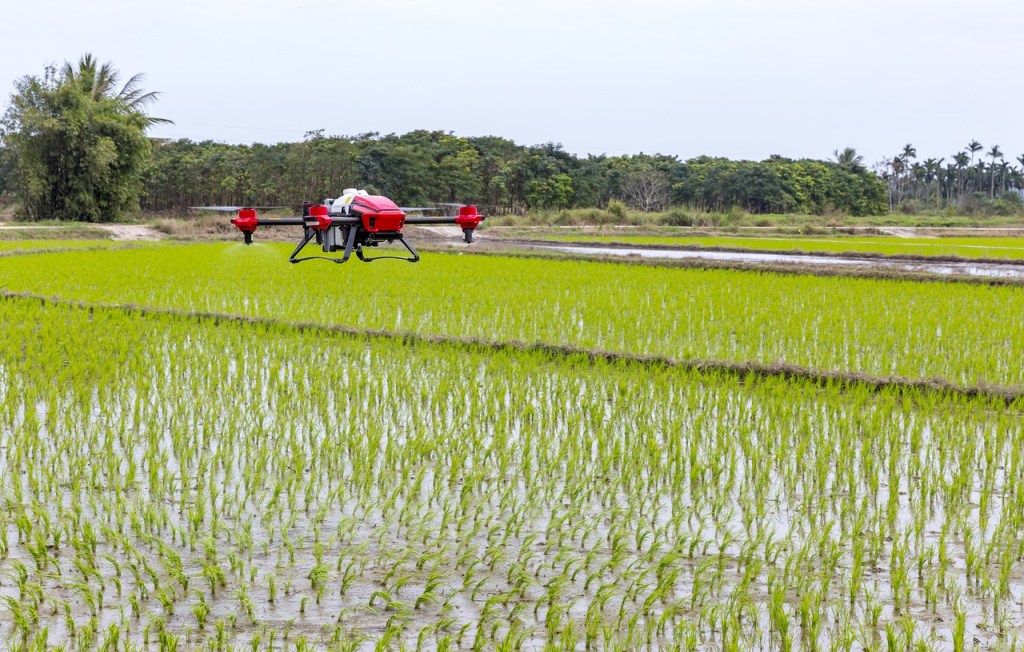
Precision agriculture and artificial intelligence (AI). Through the use of GPS, drones, sensors, and machine learning, precision agriculture helps farmers optimize the use of their resource, reduce costs, and improve crop yields. Drones can be used to monitor crop health, and artificial intelligence can use data to offer suggestions on challenges such as planting area or pest control.
- Limited environmental impact. Precision farming helps to prevent the overuse of fertilizers and pesticides, directly reducing chemical runoff into bodies of water and protecting the health of soil.
- Improved efficiency and yield. Decisions driven by AI data can lead to improved resource allocation, higher productivity, and reduce the amount of wasted food.
- Increased safety. Automated machinery and AI powered robotics can complete dangerous and physically demanding tasks instead of farmworkers, helping to improve their safety and reduce risk of injury.
Agricultural biotechnology. Today, biotechnology can use genetic engineering to improve the traits of both crops and livestock. Examples of this include developing crops that are more resilient to drought, insects, and diseases. Genetic engineering can even be used to increase their nutritional value.
- Improved food security. Through genetic engineering, crops can be improved to increase food production in areas where traditional agriculture is difficult.
- Sustainability. Biotechnology is able to reduce the dependence on fertilizers, pesticides, and other chemicals through genetic development of crops. This decreases agriculture’s negative impact on the environment.
Vertical farming. Urban populations and cities are growing at rapid rates. As a result, there is very limited space in these areas to grow crops. Indoor vertical farms can offer a solution. Vertical farms offer the ability to produce crops year round, unaffected by weather conditions. They also require less space due to their vertical nature.
- Decreased use of land and water. Vertical farming techniques take up significantly less land than traditional agricultural practices. They also use closed loop systems which are able to drastically reduce the amount of water consumed compared to conventional farming.
- Lower costs of transportation. Vertical farms are usually situated near cities, much closer than more traditional farms. Because of their proximity to the urban population, the produces doesn’t have to be transported as far. This allows for the reduction of energy and carbon emissions that are usually associated with the transportation of food.
However, there are ethical challenges that cannot be ignored
Despite their promise of increased productivity, safety, and sustainability, agricultural technologies can introduce a plethora of ethical challenges that require thoughtful and careful considerations.
Negative environmental consequences. Often praised for their environmental benefits, certain agricultural innovations have many potential downsides.
- Unintended consequences. It is not yet understood what long term effects genetically engineered crops have on biodiversity and the surrounding ecosystem.
- Lifecycle concerns. It is true that vertical farms can reduce land and water use, however, they often use extremely large amounts of energy. The overall carbon footprint of vertical farms heavily depends on the energy source used for lighting and climate control.
Negative impacts on the workforce and rural communities. New technologies such as automated machinery and artificial intelligence cab improve safety and efficiency within the workplace. However, they directly put the jobs of agricultural workers at risk, especially those in less technical positions.
- Destruction of rural life. Many rural communities depend on agricultural employment for economic growth. The introduction of automation in the workplace directly leads to job loss and the decline of family farms.
- Loss of knowledge. Today, farming decisions are increasingly led by AI suggestions. These decisions, led by artificial intelligence, take away from the educational side of the sector. The agricultural knowledge and skills that are passed down from generation to generation can be lost forever due to reliance on AI.
Social equity and the digital divide. The increasingly high cost of advanced agricultural technologies can directly exacerbate lingering inequalities.
- Access to technology. Expensive technologies such as autonomous tractors or AI driven machinery are often only available to large, well-funded agricultural corporations. This divide in access creates a barrier that prevents small family farms from keeping up, making it difficult for them to compete.
- Algorithmic bias. AI algorithms are trained on existing data, which reflects and expels biases. This data often disproportionately represents large-scale corporate farming. As a result, algorithms may not be suitable to smaller, more diverse farming practices.
Animal welfare. Through the growth of the use of AI technology and automation in animal agriculture, there is an increasing risk that animals will be viewed as mere production units, rather than living beings. Additionally, the use of biotechnology can be used to increase the tolerance of animals to inhumane production settings, creating an extremely significant ethical concern.
Data ownership and privacy. Precision farming creates large amounts of sensitive data about a farm’s soil, weather, yields, and finances.
- Data ownership and control. Sensitive pieces of agricultural data are usually kept and stored by large technology companies. This storing of sensitive data raises many questions such as who the rightful owner is or how the data should be properly kept. Many farmers have serious concerns about losing control of their own information. This is because their information can be sold or used by corporations to gain unfair market advantages.
- Power imbalance. The consolidation of agricultural data into the hands of a few powerful companies creates a significant imbalance in power between farmers and tech providers.
So what can we do?
We must work together to ensure that agricultural innovations promote both societal benefits and environmental sustainability. It is imperative that were prevent them from merely serving as a tool for corporate profits. To accomplish these goals, a multi-dimensional approach is necessary.
- Promote sustainability. We must introduce comprehensive assessments and testing for new technologies to make sure that they don’t simply shift environmental challenges. These assessments should include evaluations regarding their true energy and material costs.
- Prioritize a fair transition. Automation is becoming increasingly used in the agricultural sector, replacing traditional jobs. We must invest in workplace training to equip workers with skills that can translate into new roles. Without training, many rural areas will experience mass unemployment.
- Diminish the digital divide. We must introduce incentives, subsidies, and training programs that allow smaller farms the ability to access and afford new agricultural technologies. This will require a set of new governmental policies that prioritize social equity and economic prosperity.
- Introduce accountability. In order to secure accountability within the technology sector, we must introduce new regulations that help to increase transparency throughout the field. These regulations will outline the expectations of new technologies and will hold developers accountable for the consequences of their actions.
- Promote proper data holding. Policy makers must work together with both farmers and technology developers to create new guidelines that distinguish the rights that farmers have regarding their data and how it is shared. These guidelines should prevent big tech companies from harvesting and sharing farmers’ data without the consent, helping to promote the success of small scale farms.
At the end of the day, the future of agriculture depends on how we decide to regulate and implement new technologies. We must work in a collaborative effort, actively engaging with ethical dilemmas, incentivizing social justice, equity, and environmental prosperity.
SOURCES:
https://www.nifa.usda.gov/topics/agriculture-technology
https://masschallenge.org/articles/agriculture-innovation/
https://www.gao.gov/products/gao-24-105962
https://www.sciencedirect.com/science/article/pii/S0305750X2100214X