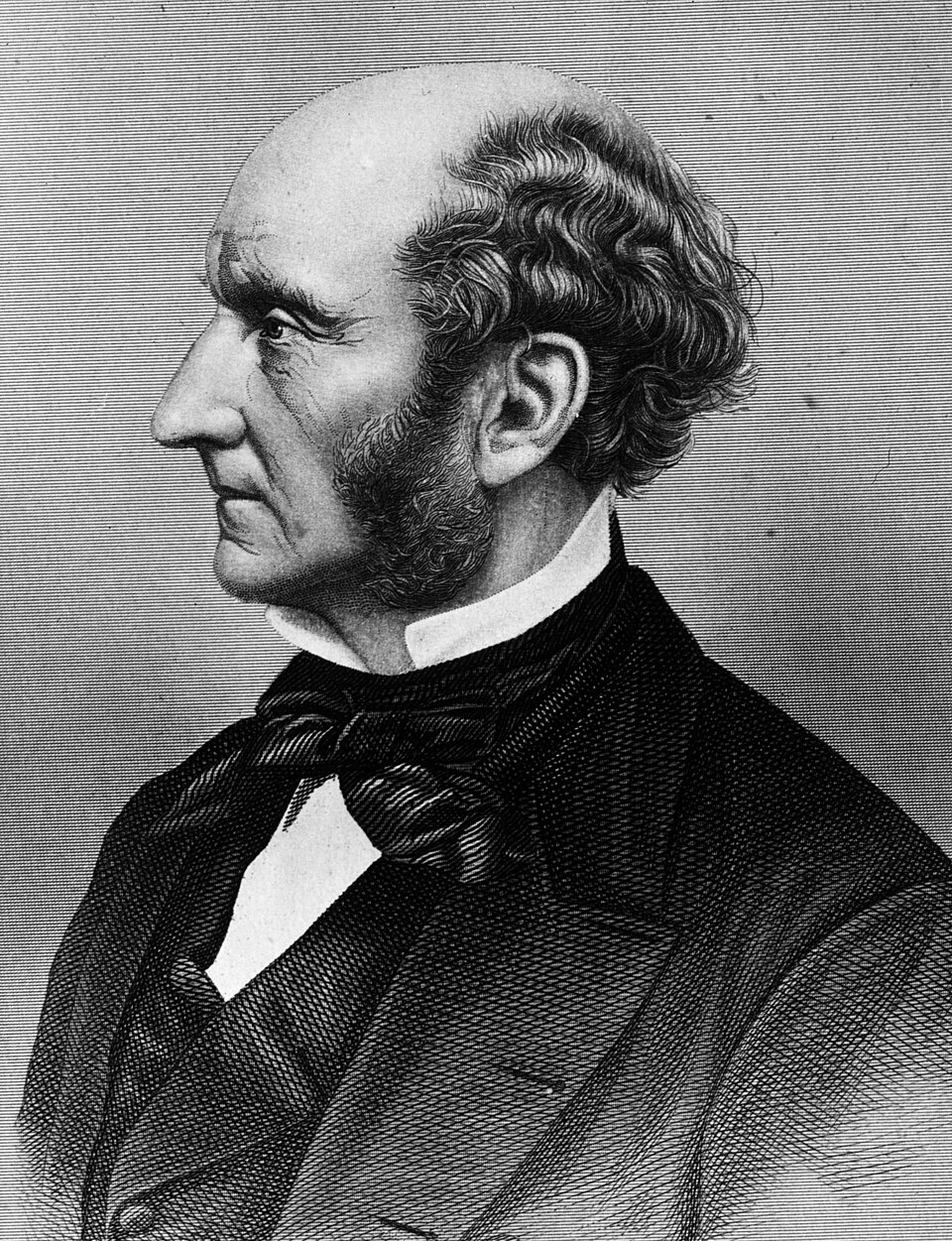
John Stuart Mill was an English philosopher, politician, and economist during the 19th century. Mill was an influential figure, advancing the field of political economy and establishing the foundations of social liberalism.
One of Mill’s most influential pieces of writing is On Liberty, a short book that built on prior enlightenment philosophers such as Locke, Rousseau, Montesquieu, and Hobbes. Through the book, Mill explores the fundamental social liberties that must be present for society to flourish. Mill defended freedoms such as speech, individuality, and choice, arguing that government encroachments risk opening the doors of tyranny. However, Mill concedes that society can limit these freedoms if certain individuals abuse them to inflict harm upon others. Mill attempts to find a balance between these opposing sides to maximize the total utility of society.
Mill starts off by explaining the Tyranny of the Majority. Oppression by the state is not necessarily only present in authoritarian or non-democratic regimes. Rather, it can exist in democratic institutions through social tyranny: the voices of the majority are able to out-muscle and suppress individual freedoms. To protect against social tyranny, liberties must be protected in three different spheres: The freedom of thought and speech, the freedom of personal choice, and the freedom of assembly. These liberties should be inherently established within society for it to flourish.
Mill goes on to stress the importance of free speech within society, explaining the value new ideas bring, even if erroneous. All truths and beliefs should be open to challenge, constantly probed to ensure their legitimacy. If our commonly-held beliefs are not constantly challenged by opposing ideas, they become passive truths. If incorrect, these passive truths serve as a detriment to society. To prevent these incorrect ideas from becoming permanent within a nation, it is imperative that they are challenged. Even if the opposing viewpoints are false, they force us to strengthen our own arguments, articulating the belief in question and further affirming their legitimacy. A nation that does not protect free speech risks establishing permanent beliefs that are false. This idea expands beyond purely speech, governments must protect against other liberties such as freedom of choice for society to flourish. Innovation, both technologically and socially, comes through experimentation and non-conformity. A world in which the individual has little control over their actions results in little innovation. This is exemplified in the Soviet Union during the Cold War. The Soviets built their nation through centrally-planned economies, everyone working together as equals to accomplish goals laid out by the state. Those in charge prevented individual freedoms: your role in society was pre-determined and you weren’t allowed to express ideas that went against the state’s ideology. Because there was no freedom of economic pursuits (the state controlled monopolies in every economic sector), there was no competition and consequently innovation fell behind. In free-market economies, the ability to profit off of new ideas and concepts promotes innovation and the introduction of new technologies. Because there was no competition in the Soviet Union, monopolies had no incentive to innovate as their hold on the market could never be taken away. The elimination of the freedom to pursue new ideas directly prohibited technological innovation. Allowing everyone to choose their own life path and goals directly contributes to the benefit of both the nation and the individual.
At the end of the book, Mill introduces limitations to his previous argument. While it is necessary that certain freedoms exist so that society can flourish, these freedoms can be taken away in certain circumstances. For an individual to be stripped of their personal liberties, they must be using them to inflict harm upon others. Take freedom of speech: If you use your free speech to defame someone by publishing libel, you are directly inflicting harm on them and risk damaging their reputation. In that case, it is possible to strip the attacker of their freedom of speech to protect others. However, this limitation can prove dangerous and must be dealt with correctly within society. Those in power can use the claim that certain freedoms are inflicting harm upon others to limit the liberties of their people and grow their own power.
John Stuart Mill, famous for his utilitarian ideas, used personal freedoms as a tool to maximize benefit within society.
Works Cited:
https://www.britannica.com/biography/John-Stuart-Mill