
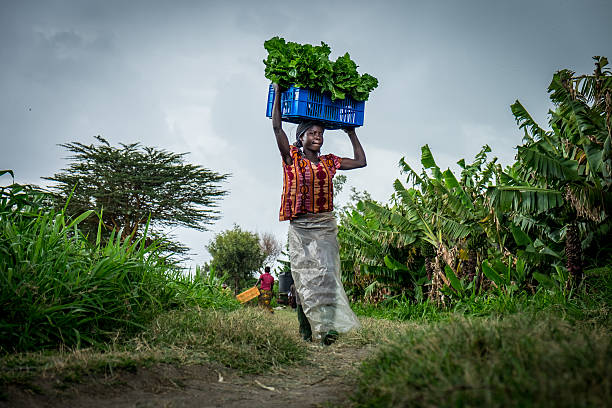
I have recently had the opportunity to interview Dr. Chakib Jenane, formerly Director of Argo-Industries Technology at the United Nations Industrial Development Organization, and currently the Director of Sustainable Development at the World Bank for Western and Central Africa. Dr. Jenane is a prominent international expert in food and agriculture policy. He conveyed a strong message in my interview: the rest of the world is making progress in enhancing agricultural productivity and is laying the foundations for food security, but the “food insecurity situation in Africa is critical and continues to deteriorate.” Dr. Jenane expressed his concern about the scale of food insecurity in Africa, and the deteriorating food situation throughout the continent. He offered his analysis, explaining that major transformation is still possible in Africa if systems are able to adapt and change at scale.
An alarming global trend
To start off the interview, Dr. Jenane highlighted frightening statistics from around the globe: “In 2024, more than 295 million people faced acute hunger worldwide, with Africa identified as a primary epicenter of this crisis. According to a separate United Nations report from the same year, over 20% of Africa’s population, totaling 307 million people, were affected by hunger.” He was especially concerned as he compared Africa’s development compared to the rest of the world: “While global hunger rates are declining, hunger in most African subregions continues to rise. Projections indicate that by 2030, nearly 60% of the world’s chronically undernourished population will reside in Africa.” A recent example of this trend was when Sudan officially declared famine in 2024, which was the first declaration on the African continent since 2020. This serves as a stark reminder on the fragility of food systems in developing countries as of recent times.
How to reverse the trend?
Climate resilence
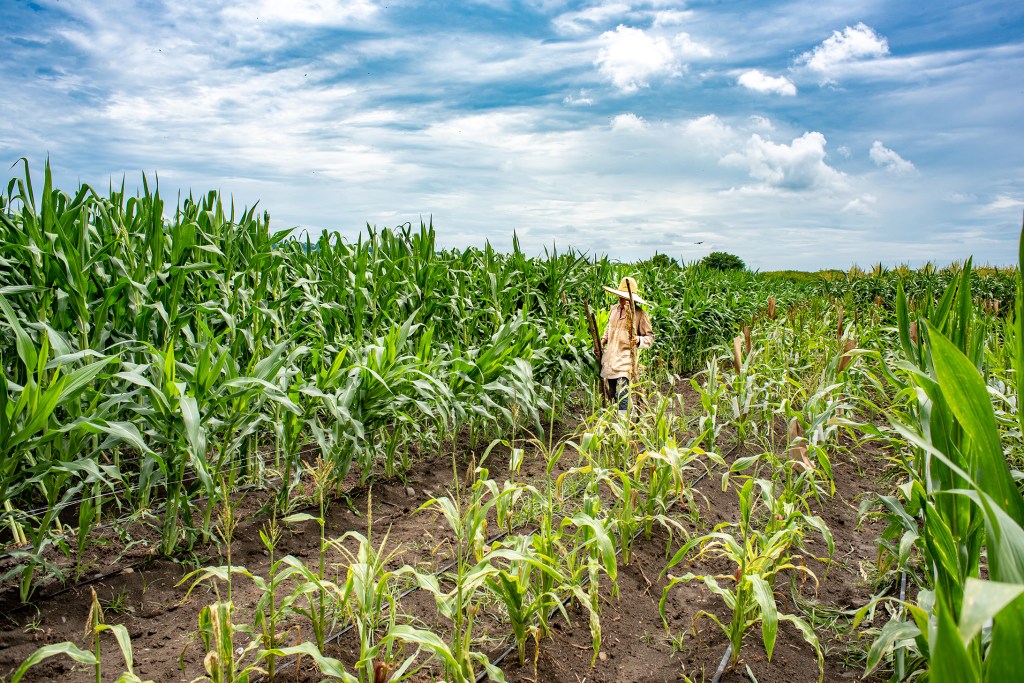
So how do we address this global issue? Dr. Jenane underscored that the most important priority should be building “robust, systemic climate resilience while fundamentally transforming food production and value chains across the continent.” Today, African agriculture has remained mostly rain-fed, which makes it vulnerable to extreme climate shifts and variability, which are becoming increasingly common due to climate change. Resilience must be established throughout the entire food system, not just at the agricultural level. This resilience starts with expanding agrifood output through climate-smart agriculture: “Substantial investments are needed in climate-smart agricultural practices, modern irrigation systems, high-quality and climate-resilient seed varieties, and greater access to technology and farmer training. Scaling up resilient approaches, such as drought-tolerant crops and sustainable water management, will help mitigate the impacts of adverse weather, boost productivity, and safeguard livelihoods.”
Supply chain infrastructure
Next, Dr. Jenane explained the importance of minimizing post-harvest losses. To reduce food loss during storage and transportation, upgrades must be made to the supply chain. It “requires upgrading supply chain infrastructure, implementing innovative storage solutions, and empowering farmer cooperatives. Reducing post-harvest losses not only increases food availability but also improves farmer incomes and alleviates pressure on production systems.”
Regional trade
He also stresses the benefits of enhancing intra-African agrifood trade: “Strengthening regional trade entails harmonizing standards, lowering trade barriers, and investing in efficient cross-border logistics. By expanding intra-African trade, food can be distributed more effectively across regions, helping to address local shortages and create new market opportunities for African producers.”
Local processing
Dr. Jenane highlighted the idea that boosting local food processing is critical in building positive food systems. Processing food within Africa creates employment opportunities, reduces reliance on imports, adds value to local agricultural products, and “underpins resilient value chains, enabling African agrifood systems to better withstand global market fluctuations and supply disruptions.”
Agriculture and climate change
Repeatedly throughout our interview, Dr. Jenane explained to me that we cannot solely view agriculture as a victim of climate change and as a producer of greenhouse gasses. Rather, we can work to build a system in which agriculture is a solution. In fact, “significant opportunities exist to mitigate emissions while ensuring food security.” Adopting sustainable practices, such as precision farming and agroecology, can “enhance productivity without exacerbating emissions.” Sustainable agricultural practices “involve optimizing resource use, reducing chemical inputs, and enhancing soil health, thereby increasing resilience against climate variability.” Additionally, innovative technologies such as advanced genetic engineering can increase the yields of crops and decrease local reliance on environmentally harmful practices. For example, “developing crop varieties that are drought-resistant or require fewer fertilizers can contribute significantly to lowering emissions while safeguarding food supplies.” He also points to agroforestry and regenerative farming, which “can enhance carbon sequestration in soils and vegetation.”
Innovation and policies
In my interview, Dr. Jenane warned that innovation alone is not enough alone to create large-scale transformations. Policies are needed to expand and legislate the adoption of these technologies to create sustainable and efficient systems. These policies “must de-risk investment, democratize technology access, and build inclusive systems.” To foster change, he stresses the importance of government investment in research and development: “Governments should allocate funds to scientific endeavors that enhance crop resilience and optimize resource use, thereby addressing climate challenges. For instance, public-private partnerships that promote innovation in biotechnology can yield climate-resilient crop varieties.” He explained that policymakers must also work to make these technologies accessible to local farmers: “Policies that provide low-interest loans or grants can empower smallholder farmers to invest in advanced agricultural technologies. Such financial support can enhance productivity and sustainability. Countries like Kenya have implemented financing schemes for farmers adopting digital platforms for agricultural inputs, significantly improving their yield and income.” Additionally, policymakers should create programs that “educate farmers about sustainable practices and emerging agricultural technologies.” Educational programs have already been implemented to great success in India through the National Mission on Sustainable Agriculture.
The emerging technologies
Dr. Jenane went on to zoom in on emerging technologies that he sees as having the greatest potential to help build a sustainable food system in Africa. The three innovations that stood out to him were precision agriculture, biotechnology, and artificial intelligence. He noted that precision agriculture can “optimize field-level management regarding crop farming, leading to efficient resource use.” Biotechnologies and bio-stimulants “help crops resist drought and heat stress in under 12 months, a process that traditionally took years.” Additionally, open-source AI models have been, “trained on agricultural data to provide region-specific, real-time farming guidance in local languages, acting as a digital extension officer.”
Dr. Jenane explained that these technologies rely on consistent research and innovation efforts throughout Africa. To aid these efforts, “the sector still requires additional development to fully realize its potential and to address persistent challenges facing African agriculture.” This includes “enhancing research infrastructure; increasing funding for research; fostering effective collaboration among public research institutions, private sector entities and farmer organizations; and democratizing technology with a focus on developing and promoting open-data platforms and affordable, user-friendly tools to serve the needs of smallholders.”
Reason for optimism
Even though food security is a severe crisis in Africa, Dr. Jenane still remains optimistic. He pointed to the young generation, which “are starting businesses in agriculture,” and an increasing number of farmers who “are using new, sustainable methods.” There has also been a stronger commitment across the continent to make agriculture more sustainable, which is exemplified by the CAADP Action Plan. The CAADP Action Plan “sets clear goals for all African countries, showing strong support from leaders.”
To close out the interview, Dr. Jenane told me that he “chose a career in agriculture research and policy” because he wanted to “work in a field that brings together many different areas, like science, technology, policy, economics, and social issues.” He was especially passionate due to the fact that “working in agriculture makes a real difference in people’s lives.”
In a final note to aspiring students, Dr. Jenane advised “to embrace interdisciplinary learning and stay informed about technological advancements, as these will be key in shaping the future of food security.”





Leave a comment